


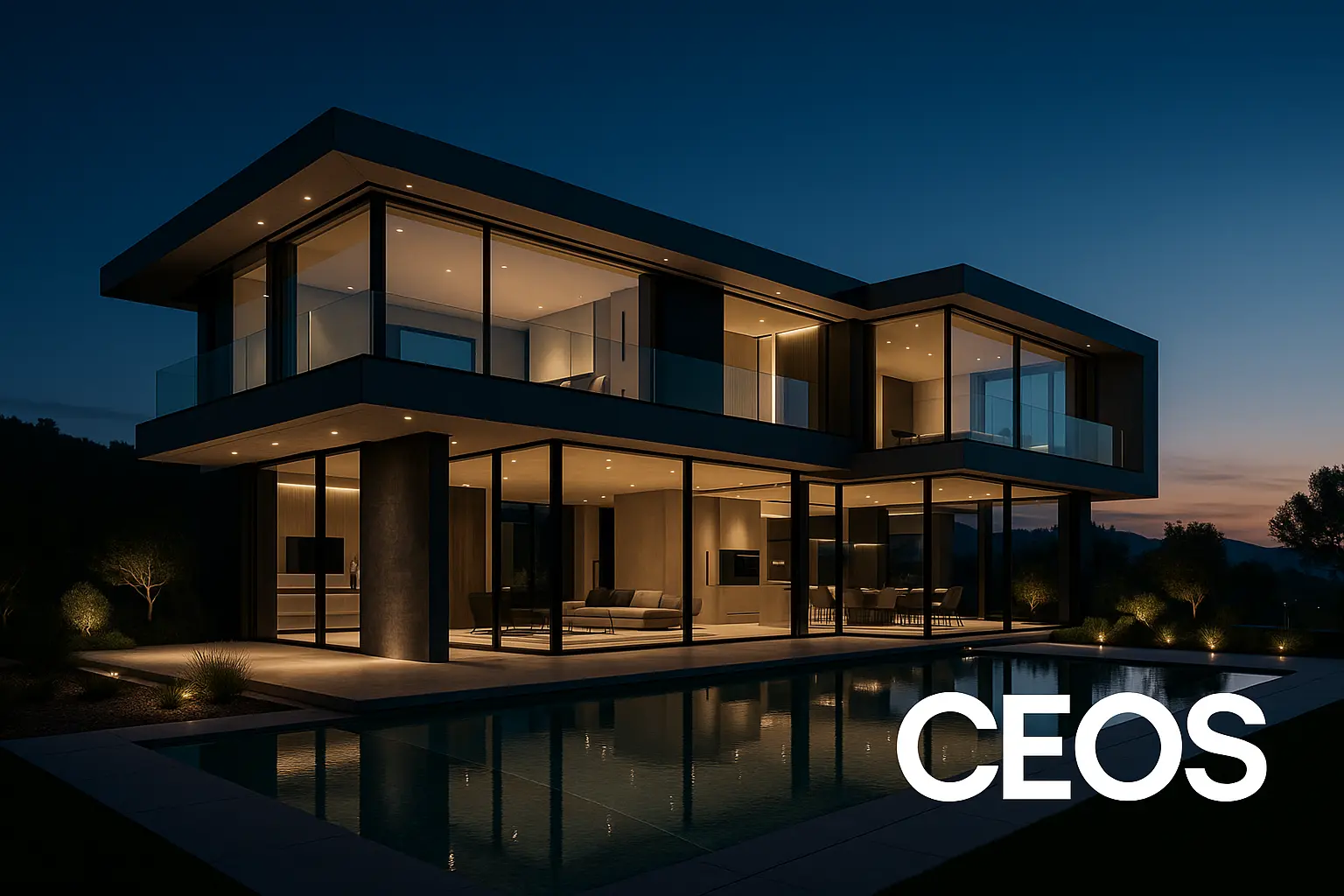
Smart Mansions & High-Tech Living
How Technology, Design, and Security Are Redefining the Future of Living
Elegance That Thinks
In the hills of Bel Air, a black steel gate glides open—silent, almost meditative. Beyond it lies a residence that doesn’t impress with size, but with intelligence. Light adjusts to footsteps, climate zones shift with the rhythm of the day, glass facades tint automatically when the sun changes the texture of the room.
Welcome to the future of luxury living: homes that aren’t just inhabited— they think.
High-Tech as the Heartbeat
Modern luxury homes are no longer simply places. They are ecosystems. Their essence is built on sensors, software, and design. Every element interacts—seamlessly, intuitively, elegantly.
AI-Powered Control Systems
Today’s luxury estates rely on adaptive intelligence:
- systems learn habits
- energy flows optimize themselves
- light, sound, and temperature anticipate needs
- security systems analyze movement patterns
Technology becomes a personal assistant—never intrusive, always integrated.
“Real luxury is the time a house gives back to me,” says a developer from Silicon Valley.
Architecture That Feels
Smart mansions follow a refined aesthetic: less opulence, more precision.
Key characteristics
- fluid open-plan layouts
- invisible technology
- natural high-end materials
- modular elements for maximum flexibility
- glass, concrete, and wood in meditative balance
The architecture isn’t static—it moves with the life of its residents. Ceilings and walls transform into projection surfaces. Gardens become sensor landscapes. Pools become climate-controlled sculptures.
Security as an Artform
Security architecture in ultra-luxury homes has evolved into its own discipline—discreet, high-precision, fully networked.
New standards include:
- controlled access zones
- biometric scanning
- invisible surveillance
- drone patrols
- panic rooms with autonomous support systems
Security doesn’t mean limitation. Security means freedom—beautifully protected.
Sustainability as Status
Luxury without a future has no foundation. That’s why the new era of smart mansions follows a principle: sustainability is not a trend—it’s identity.
The new material culture includes:
- certified exotic woods
- recycled metals
- carbon-neutral natural stone
- organic textiles
- advanced insulation with minimal energy use
Even mega-villas strive for energy autonomy: solar arrays, battery storage, rainwater systems, intelligent climate zones. Elegance and responsibility merge.
Intelligent Infrastructure
Connected pathways, electric vehicle fleets, smart street lighting— luxury neighborhoods are evolving into private micro-cities. “We don’t design houses—we design ecosystems,” explains an architect from Miami. Technology is not decoration. It is structure.
Lifestyle 4.0
Ultra-luxury is no longer about square footage. It’s about high-definition living—curated, intentional, immersive.
Common features include:
- private wellness studios with AI coaches
- holistic spa zones
- home cinemas with immersive acoustics
- digital galleries for NFTs and fine art
- indoor golf & sports simulators
- multi-sensory entertainment spaces
Here, comfort isn’t coincidence—it’s choreography.
Why Smart Mansions Are Becoming Icons
- Precision: homes that adapt and respond
- Time: automation as the ultimate luxury
- Calm: architecture that absorbs stress
- Security: protection without visibility
- Identity: spaces that reflect intellect and style
Luxury is not ownership— luxury is intention.
Conclusion: The Future Is Intelligent
Smart mansions embody a new definition of elegant living—less showy, more conscious. Technology supports daily life, design embraces the individual, and security creates space to breathe.
A new aesthetic emerges—quiet, clear, confident.
Luxury today is not about how much you have. Luxury is about how precisely your life is designed.
